What Is Cancer? See Causes of Cancer, Symptoms, Types & Care Now
Learn what cancer is, its causes, types, symptoms, stages, and treatment options.

“You have cancer.” This one sentence from the doctor can move a person into a different zone. The disease of one person affects all family members on a long-term basis. At that moment, knowing what to expect, the recovery rate, and the recurrence rate helps to understand your prognosis in a better way. This blog will provide those basic ideas which can help you report to your doctor early.
What is cancer?
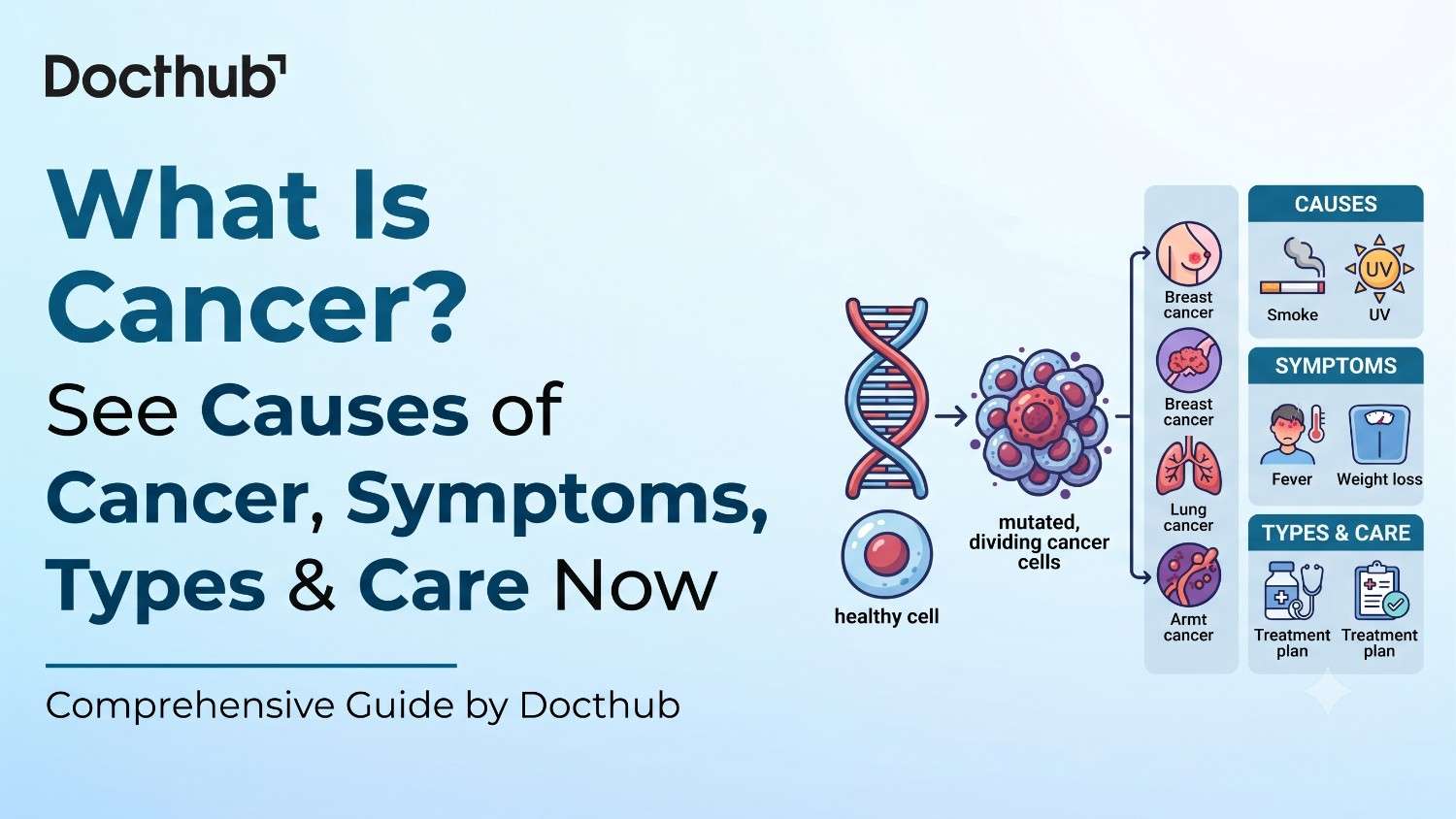
In simple terms, cancer is defined as a condition involving abnormal cell growth that affects the human body. In essence, the term 'cancer' describes a large group of diseases affecting the human body.
The human body consists of around a trillion cells. As the body requires cells to grow and multiply, eventually those cells get old and damaged; they die and are replaced by new cells.
Sometimes in the body, this process gets disrupted. The damaged old cell, which should die, multiplies and grows, forming a tumour or lump in that organ.
There are 2 types of tumours
1) Benign, which is non-cancerous
2) Malignant, which is cancerous
Metastasis occurs when cancer progresses and invades healthy structures other than the primary organ of origin. A benign lesion does not metastasise and rarely recurs after surgical removal. On the contrary, after removal of a malignant tumour, it can recur. A name will be given based on the primary site of cancer origin. For example, breast cancer metastasis to the lungs will be called metastatic breast cancer.
What is the cause of cancer?
There is no single cause of cancer. It will differ from person to person and from type of cancer. The main causative factor is a combination of genetic influence and environmental factors. Also, a family history of cancer increases the risk of cancer occurrence due to genetic influence.
A mutation or alteration in a gene is the main culprit in the origin of cancer. Cancer occurs as a result of changes (mutations) in the DNA of cells. In this setting, the DNA of a cell is organised into many individual genes. Genes consist of instructions for the cell regarding its functioning process. Any mutation or error leads to disrupted functioning, which manifests as a cancerous lesion.
According to WHO, environmental factors can be categorised in 3 ways:
- Physical carcinogens include ultraviolet light from the sun and tanning beds responsible for skin cancer, and ionising radiation such as radon gas, which seeps out of the ground and collects in buildings, resulting in lung cancer.
- Chemical carcinogens include betel nut chewing; tobacco smoke can cause oral cancer; alcohol and aflatoxin lead to liver cancer; asbestos; and arsenic in drinking water cause lung or skin cancer.
- Biological carcinogens are infections. Many infections are responsible for cancer origin, such as HPV for cervical cancer, hepatitis virus for liver cirrhosis leading to liver cancer, and H. pylori and Epstein-Barr for gastric cancer.
Along with those, everyday routines such as betel nut, tobacco smoke, alcohol, low nutrition levels, excess weight, and air pollution can contribute to cancer occurrence.
What are types of cancer?
There are more than 100 types of cancer occurring in the human body. It is based on the type of tissue involved and the origin of the cancer for easy understanding. Majorly, cancer can be divided into:
1) Solid tumour cancer—This is the most common type of cancer, involving epithelial tissue, bone, or connective tissue, such as carcinoma and sarcoma.
2) Blood cancer—This is a type of cancer that affects the blood system, such as lymphoma and leukaemia.
Based on the tissue or organ involved in the cancerous process, it can be divided as follows:
- Carcinoma—begins in the skin or the lining of internal organs. The most common group by far, covering most breast, lung, colon, and prostate cancers.
- Sarcoma—begins in bone, muscle, cartilage, fat, or other connective tissue.
- Leukaemia—begins in blood-forming tissue in the bone marrow and circulates rather than forming solid masses.
- Lymphoma—begins in lymphocytes, part of the immune system.
- Myeloma—begins in plasma cells in the bone marrow.
- Melanoma—begins in the pigment-producing cells of the skin.
- Brain and spinal cord tumours—central nervous system cancers, which behave differently because of where they sit.
Cancer signs and symptoms
Early cancer stages may not be physically detectable. Many times, those symptoms appear haphazardly without noticeably looking harmful. Symptoms of cancer can vary based on the organ or tissue involved. Also, the presence or absence of symptoms does not confirm cancer. A final diagnosis can be made by a specialised healthcare professional with diagnostic tests. A simple and universal rule is that if something unusual or abnormal happens in the body without subsiding within weeks and instead gets worse, that needs urgent attention from a doctor.
Usually, the following signs and symptoms may be noticed:
- Sudden lump or swelling anywhere in the body, especially the breast, armpit or testicle
- Sudden unexplained weight loss
- Constant fatigue, restlessness
- Fever, night sweats
- Cough for a longer duration, sometimes coughing up blood
- Disrupted bowel movements for weeks
- Presence of blood in urine or stool
- Presence of bleeding after menopause or an uneven menstrual cycle
- Sore or ulcer that does not heal
- Change in colour, size, or shape of mole
- Skin changes in form, colour, and texture.
- Constant pain with no evident reason
- Unable to eat, indigestion, or difficulty in swallowing
What do the stages of cancer mean?
Stages of cancer help to understand the growth and spread of disease with damage to the human body. Depending on the stage, prognosis and treatment modalities can be determined. Stages are divided based on size, growth, origin, and level of metastasis.
- Stage 0—abnormal cells present but still confined to where they began. Often called carcinoma in situ.
- Stage I—small, localised, no spread.
- Stage II—larger, possibly into nearby tissue, limited or no nodal involvement.
- Stage III—more extensive local growth with lymph node involvement.
- Stage IV—spread to distant organs. Also called metastatic or advanced cancer.
The stage of cancer is confirmed when it is diagnosed, and it does not change, even if the cancer progresses. A stage II breast cancer that spreads is described as stage II with metastasis, not stage IV.
What are cancer treatment options?
The first step in treatment is an accurate diagnostic modality at an early stage. A single or combination of treatment modalities can be used according to stage and type of cancer. If cancer is caught at an early stage, such as breast cancer, cervical cancer, oral cancer, etc., it is possible to manage with a combination of therapy.
Widely used treatment options prescribed by professionals are as follows:
- Surgical excision of the cancerous lesion to prevent spread to healthy structures and reduce the chance of recurrence.
- Chemotherapy is the destruction of cancer cells with the help of medicine in the form of tablets or intravenous administration.
- Radiotherapy is radiation targeting cancer cells for their destruction.
- Immunotherapy removes the brakes that prevent the immune system from attacking cancer.
- Hormonal therapy blocks hormones that drive certain breast and prostate cancers.
- Targeted therapy interferes with specific molecular pathways within cancer cells.
- Stem cell therapy can be an option for blood cancer, which can replace damaged bone marrow.
Using the appropriate treatment protocol at the right time is a critical factor in cancer. Along with those treatments, palliative care for pain management and mental health support is necessary for patients in advanced stages.
Cancer knowledge will not help to protect, but awareness and the ability to detect those symptoms at an early stage are required. The right diagnostic method at the right time can give a chance of better treatment options and outcomes. If you want to get more disease-related awareness, visit Docthub today.
FAQs
Q.1 What is cancer, and how does it start?
A. Cancer is uncontrolled growth of abnormal cells that can invade nearby tissue and spread elsewhere. It starts when DNA damage accumulates in the genes that control cell division and cell death, usually over many years and usually requiring several faults rather than one.
Q.2 What are the early warning signs and symptoms of cancer?
A. The common early cancer signs are a new lump, unexplained weight loss, persistent fatigue, a cough lasting over three weeks, changes in bowel or bladder habits, unusual bleeding, a sore that will not heal, and a changing mole. Persistence is the signal to act on.
Q.3 What are the most common causes of cancer?
A. Tobacco is the single largest preventable cause. Alcohol, excess body weight, poor diet, physical inactivity, UV exposure, air pollution, certain infections such as HPV and hepatitis, and inherited gene faults all contribute.
Q.4 Can cancer be cured?
A. Many cancers can be cured, particularly when found early. Breast, cervical, oral and colorectal cancers have high cure rates with timely treatment, and testicular seminoma and several childhood leukaemias and lymphomas can be cured even after spread. Advanced stages can be manageable with treatment.
Q.5 What do the stages of cancer mean?
A. Cancer stages describe how much it has spread, from stage 0 (confined to its original site) through stage IV (spread to distant organs). Staging determines treatment and helps predict outcome.