High-Paying Cities for radiology salary in India: Where to Earn More?
From metros to tier-2 cities, radiology pay in India scales with role, skills, and location—big cities, bigger scans, bigger salaries.

What is Radiology?
Radiology is an allied field of medicine which uses imaging techniques such as X-rays, CT scans, MRIs, and ultrasound) to diagnose and treat disorders. Radiology has three specialties which include Diagnostic radiology, Interventional radiology, and Radiation oncology.
Diagnostic Radiology:
Diagnostic radiology uses imaging techniques like CT, MRI, ultrasound, and X-rays to identify and diagnose illnesses. Radiologists create reports, evaluate images, and counsel physicians on additional testing or treatment options. Accurate picture interpretation and simple patient evaluation are the main focuses of this discipline.
Interventional radiology:
Interventional radiology uses imaging guidance to perform minimally invasive operations like angioplasty, embolization, biopsies, and drain placements. Interventional radiologists use diagnostic imaging capabilities and procedural procedures to treat problems with smaller incisions, quicker recovery times, and reduced risk than open surgery. This field necessitates procedural knowledge, sterile techniques, and close collaboration with surgical and medical teams.
Radiation oncology:
Radiation oncology uses focused radiation treatment to treat cancer as well as certain benign conditions. Radiation oncologists design and administer precise radiation dosages, frequently collaborating with medical physicists and dosimetrists to optimize tumor control while minimizing damage to healthy tissue. This specialization focuses on treatment planning, patient follow-up, and collaboration with surgical and medical oncologists.
What Radiologists Do?
Radiologists diagnose and guide therapies using medical imaging, perform image-guided treatments, collaborate with clinical teams, manage emergency reads and ensure quality/safety regulations, teach and research, and manage operations to provide accurate and timely patient care.
Radiologists play an important role in modern medical science. Radiologist’s medical imaging helps to achieve more accurate and precise diagnosis of complex disorders and interior traumas. As a result, patients receive better therapy and recover faster. With an increase in the number of private hospitals, diagnostic chains, and advanced imaging centers, the demand for skilled radiologists is high. However, the most essential concern for many prospective students and recent graduates is: what kind of pay does a Radiology specialist receive in India? In this blog, we will analyze the salary of Radiology professionals in India.
Qualification (Overview):
- In India, attaining an MBBS degree and certified with the state medical council are prerequisites for working as a radiologist.
- After MBBS, enroll in a three-year postgraduate program like MD (Radiodiagnosis) or DNB (Radiology); such qualifications are necessary for senior clinical and consulting positions.
- Many radiologists complete brief observerships or fellowships in subspecialties like pediatric imaging, neuroradiology, or interventional radiology for their further careers.
- The technician's career path includes certificate, diploma, or degree programs like BMRIT(Bachelor of Medical Radiology and Imaging Technology), BSc in Medical Imaging, or Diploma in Radiography for non-physician professions.
- Operating X-ray, CT, MRI, and ultrasound equipment, radiation safety, and image processing are our primary areas of instruction.
- Specifically, in metro hospitals and diagnostic facilities, technicians who obtain extra qualifications in CT/MRI and PACS administration become more employable and may earn better incomes.
Radiologist Salary in India:
The Radiologist Salary in India varies based on sector, various designations and location.
Radiologist salaries are determined by their qualification (B.Sc., MD, DNB, or DMRD) and proficiency in high-demand modalities such as MRI, CT, and Interventional Radiology (IR). While the government offers a respected and stable career path, the private sector offers highly competitive, performance-based pay that can grow rapidly with demand. On average, the field offers a starting package of approximately ₹20 L - ₹35 L per annum for doctors and approximately ₹2.5 L - ₹4 L per annum for Radiology Technicians.
Government vs Private pay differences:
Government employment provides lower base and variable income but gives greater stability, benefits, and academic possibilities, whereas private-sector positions pay higher base salaries with procedure/consulting fees and gain advancements based on experience, specialization, and location.
Entry Level Salary Based on MD/DNB Radiology:
The Entry‑level MD/DNB radiologists in India typically earn ₹20 - 35 LPA in private metro City hospitals and ₹6 - 18 LPA in government/junior consultant roles, with actual pay varying by city, hospital type, and fellowship skills.
| Roles | Government | Private |
| Professors | ₹20 - ₹28 LPA | ₹24 - ₹40 LPA |
| Radiologic Technologist | ₹3.5 - ₹5 LPA | ₹2.8 - ₹4.5 LPA |
| Radiologist Assistant | ₹4 - ₹6 LPA | ₹3.5 - ₹5.5 LPA |
| Ultrasound Technician | ₹3 - ₹5 LPA | ₹3.5 - ₹6 LPA |
| X-Ray Technician | ₹2.5 - ₹4 LPA | ₹2.2 - ₹3.5 LPA |
Salary of a radiologist across various designations:
The Average Salary of various radiologists may vary with certain factors, as mentioned below.
| Job Profiles | Average Salary (INR) | Average Salary (Senior level) |
| Diagnostic Radiologist | ₹11 - ₹24 LPA | ₹45 - ₹60 LPA |
| Interventional Radiologist | ₹28 - ₹35 LPA | ₹80 LPA - ₹120 LPA |
| Pediatric Radiologist | ₹25 - ₹30 LPA | ₹55 - ₹75 LPA |
| Neuroradiologist | ₹25 - ₹30 LPA | ₹55 - ₹75 LPA |
| Radiation Oncologist | ₹22 - ₹28 LPA | ₹50 - ₹70 LPA |
Salary Based on Various Cities for Radiologists:
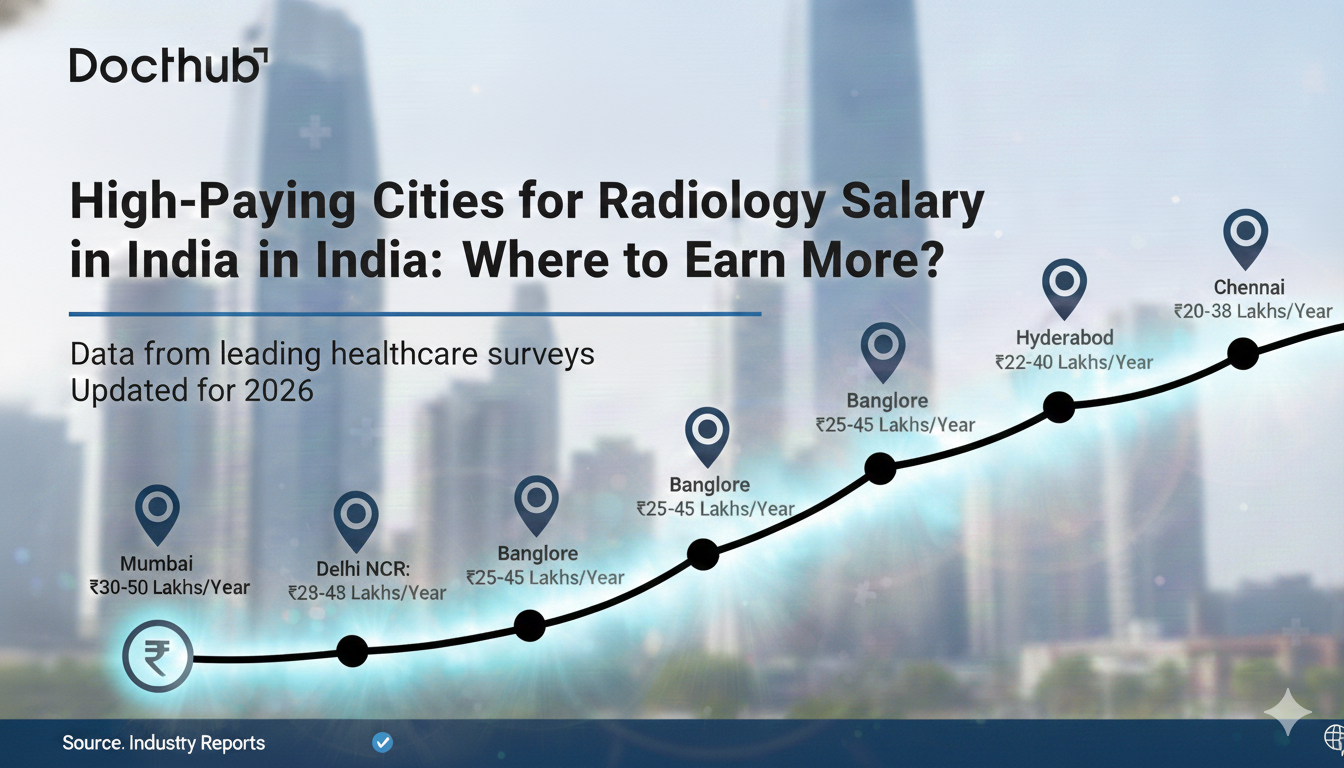
The Salary based on cities in the private sector is mentioned below. The salary may be different based on certain roles.
| Rank | City | Average Annual Salary Experienced (Government) | Average Annual Salary Experienced (Private) | |
| 1 | Mumbai | ₹18–35 L | ₹45 – ₹75 L | |
| 2 | Delhi (NCR) | ₹16–34 L | ₹42 – ₹70 L | |
| 3 | Hyderabad | ₹14–30 L | ₹38 – ₹65 L | |
| 4 | Gurugram | ₹15–30 L | ₹36 – ₹62 L | |
| 5 | Chandigarh | ₹12–28 L | ₹34 – ₹58 L | |
| 6 | Lucknow | ₹10–24 L | ₹32 – ₹55 L | |
| 7 | Pune | ₹12–26 L | ₹30 – ₹52 L | |
| 8 | Bangalore | ₹13–28 L | ₹28 – ₹48 L | |
| 9 | Chennai | ₹12–26 L | ₹25 – ₹45 L |
Radiology is a challenging and highly rewarding profession that combines modern technology with medical knowledge. Sub-specialization, especially in Interventional Radiology, and picking areas with the largest demand-supply imbalance, are the best ways for newcomers to the field to make the highest pay. With the challenging learning curve, one of the most rewarding careers in modern medicine is financial security and a vital role in patient diagnosis.
FAQs
Q1. What is the starting radiology salary in India for freshers?
A. The starting Salary for Radiology in India for fresher is approximately ₹ 2.5 - 3 LPA.
Q2. Which city offers the highest radiology salary in India?
A. Mumbai offers the highest radiology salary in India.
Q3. How much does an MD Radiologist earn per month in India?
A. MD Radiologist earns approximately ₹ 1.5 Lakhs per month in India
Q4. Does an Interventional Radiologist earn more than a Diagnostic Radiologist?
A. Yes, Interventional Radiologist earns more than a Diagnostic Radiologist since their work combines high-level diagnostic skills with minimally invasive surgical techniques.
Q5. Is there a difference between government and private radiology salaries?
A. Yes. Government radiology jobs usually offer lower but stable salaries with fixed pay scales. Private radiology jobs generally pay higher salaries, especially in big cities, but with heavier workloads and less job security.